Living with a Dug Well in New Hampshire: Risks, Upkeep, and When to Drill a Replacement
Many older homes across New Hampshire still get their water from a dug well. If you own one, or you are looking at a property that has one, it helps to know how these wells work, where they tend to struggle, and what keeps the water safe. This guide covers the main risks of a dug well in New Hampshire, the upkeep that matters most, and the signs that it may be time to drill a replacement.
What Is a Dug Well?
A dug well is a wide, shallow well excavated down to the water table, the level underground where soil and gravel are saturated with water. Older dug wells are often lined with fieldstone or brick. Newer ones usually use stacked concrete rings, called tiles, with a concrete cover on top.
The New Hampshire Department of Health and Human Services describes dug wells as typically 10 to 30 feet deep. A drilled well, by comparison, is typically 100 to 400 feet deep and draws water from fractures in the bedrock, the solid rock beneath the soil. That difference in depth explains most of what follows.
Many farmhouses in towns like Walpole, Alstead, and Charlestown were built long before drilling rigs were common, so a dug well is often original to the property.
The Main Risks of a Dug Well
Surface water and bacteria
Because a dug well draws from shallow groundwater, rain and snowmelt can reach it quickly, sometimes before the soil has had a chance to filter them. The state's private well fact sheet puts it plainly: "Dug wells have the highest risk of contamination from bacteria and the highest risk of surface pollution." Possible sources include septic systems, livestock, fertilizer, and road runoff.
Two results matter most on a dug well test:
- Coliform bacteria: a group of common bacteria used as a warning sign. They are usually harmless themselves, but finding them means surface water is likely getting in, and germs that do cause illness could follow the same path.
- Nitrate: a compound that comes from fertilizer, manure, and septic systems. High levels are a particular concern for infants.
Drought and low water
A dug well sits near the top of the water table, so it feels a dry spell first. When groundwater levels drop, a shallow well can run low or go dry while deeper bedrock wells keep producing.
New Hampshire's recent drought showed this clearly. The NH Department of Environmental Services (NHDES) received reports of about 200 wells going dry over a few months, and roughly two thirds of the reported dry wells were shallow dug wells. NHDES officials said the true number was likely much higher, since reporting is voluntary.
Aging construction
Stone liners shift with frost, mortar crumbles, and covers crack. Each gap is a path for surface water, insects, and small animals to enter the well. A dug well that has served a home for decades may still look fine from the yard while letting in water from just below the surface.
Dug Well Upkeep That Makes a Difference

Test on a schedule
Testing is the only way to know what is in your water. NHDES recommends testing private wells for bacteria and nitrate every year. It also recommends a standard analysis (a broader panel of common contaminants, including arsenic), plus radon and PFAS, every three to five years. NHDES notes that the radon-in-water test can be skipped for dug wells, since they do not reach bedrock.
Also test after flooding, after work on the well or septic system, or any time the water changes in taste, smell, or color. Use a state-accredited laboratory so the results can be trusted.
Keep the top of the well tight
Most dug well problems start at the surface, so this is where upkeep pays off:
- Cover: make sure the cover is sound, fits tightly, and sits above the surrounding ground, not level with it.
- Grading: shape the soil so it slopes away from the well and rainwater never pools against it.
- Gaps: have cracks or loose stones near the top of the liner sealed.
- Access: keep vehicles off the area around the well, and never cover it with a deck or patio you cannot easily remove.
Watch what is nearby
Keep fuel, fertilizer, pesticides, and pet waste well away from the wellhead. Know where your septic tank and leach field are, and keep that system maintained. A failing septic system close to a shallow well is a common source of bacteria.
Pay attention to changes
Water that turns cloudy after a heavy rain, a new taste or odor, or a pump that runs longer than it used to can all be early signs of trouble. If testing does show a problem, a disinfection or filtration system can often correct it. Ultraviolet (UV) disinfection, for example, uses UV light to inactivate bacteria as water flows through a chamber. You can learn more about water conditioning and treatment options for private wells.
When to Drill a Replacement Well
Repairs and treatment can keep many dug wells in service. Some situations, though, point toward a drilled well:
- Repeated bacteria results after repairs and disinfection, which usually means surface water is getting in in a way that cannot be fully fixed.
- Running low or dry during late summer or drought, especially if it has happened more than once.
- A failing liner with collapsing stones or cracked tiles.
- Growing water needs, such as an addition, more people in the home, or a second bathroom.
- A contamination source you cannot move, such as a nearby road treated with salt or a septic system on a tight lot.
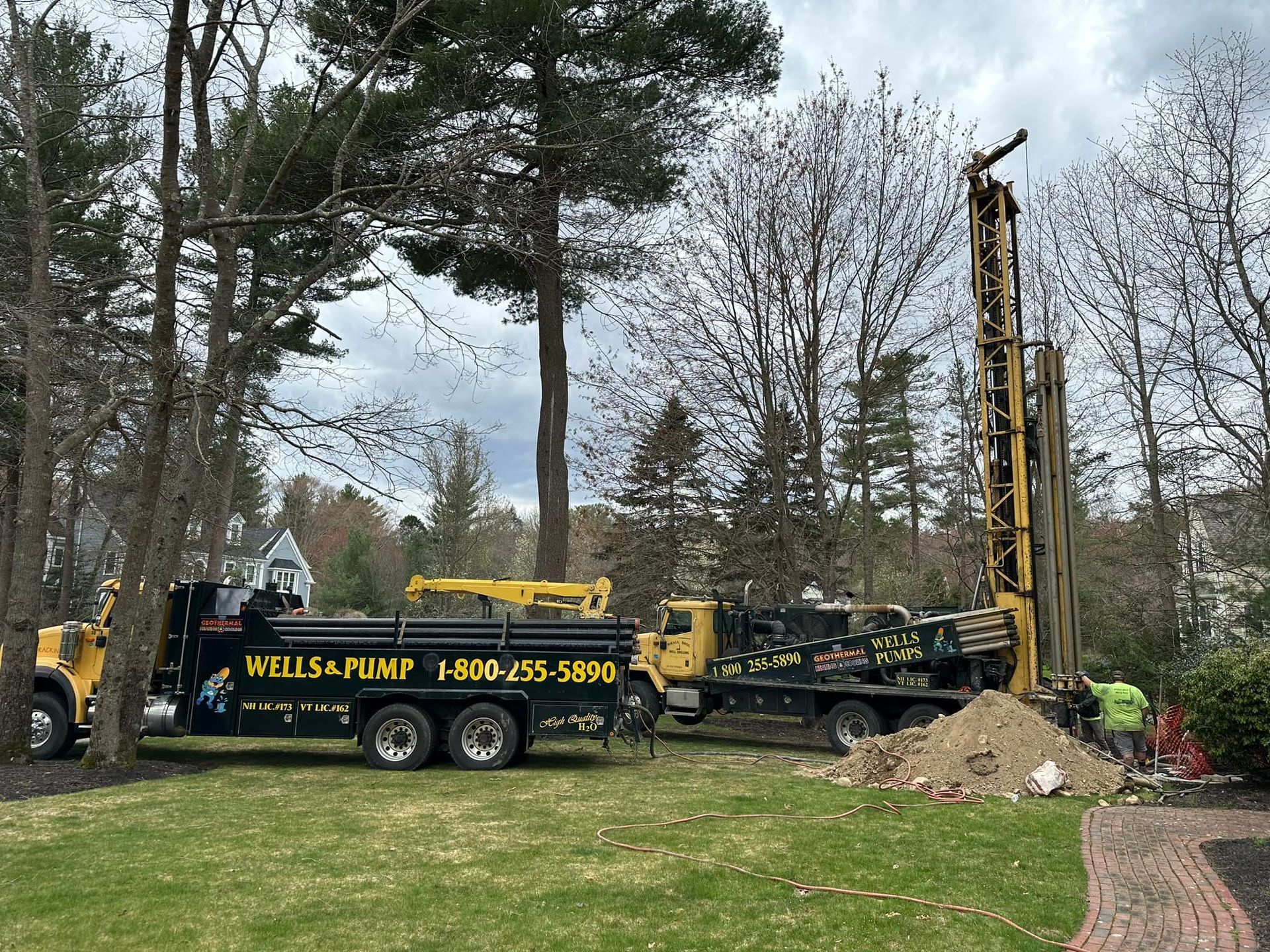
A drilled well is built differently. Steel casing, a pipe that runs from the surface down into bedrock, is sealed in place to keep surface water out. The well then draws from fractures deep in the rock, which are far less affected by short-term weather. Learn more about how water well drilling works.
A drilled well is not free of concerns. New Hampshire bedrock can contain natural arsenic, uranium, and radon, and the state notes that drilled wells carry the highest risk of these natural chemical contaminants. A new drilled well should get a full water test, and treatment should be planned if results call for it.
If you are weighing the decision on an older property, the local geology matters. Our page on well drilling in Walpole, NH covers local conditions in one Connecticut River valley town.
What happens to the old dug well?
An unused well left open is a safety hazard and a direct path for contamination to reach groundwater. New Hampshire's well construction rules (We 600, including Part We 604) set out how unused wells must be abandoned, meaning permanently filled and sealed. If you hope to keep the old well for another use, such as watering a garden, ask a qualified well contractor what the rules allow before you decide.
Frequently Asked Questions
How deep is a dug well in New Hampshire?
Most dug wells in New Hampshire are about 10 to 30 feet deep, according to the state’s private well guidance. They are also wide, often several feet across, because they were dug rather than bored. Drilled wells are much narrower and typically reach 100 to 400 feet into bedrock.
How often should I test water from a dug well?
NHDES recommends testing every year for bacteria and nitrate, and every three to five years for a standard analysis plus PFAS. Because dug wells are more exposed to surface water, also test after flooding, after septic or well work, and whenever the water changes in taste, smell, or color.
Why does my dug well run low in late summer?
A dug well draws from shallow groundwater near the top of the water table. In late summer and during droughts, that level drops, and a shallow well can run short before deeper wells are affected. Spacing out laundry and other heavy water use can help in the short term.
Can a dug well be made safe to drink from?
Often, yes. Repairing the cover, sealing gaps in the liner, regrading the soil around the well, and adding disinfection such as UV treatment can address many bacteria problems. Follow-up testing is the only way to confirm the fix worked. If contamination keeps returning, a drilled well may be the better answer.
Is a drilled well always better than a dug well?
A drilled well is better protected from surface contamination and drought, which is why it is usually the more reliable choice. It can, however, pick up natural contaminants from bedrock, such as arsenic, uranium, and radon. Any new drilled well should have a full water test so treatment can be planned if needed.
The Bottom Line on Dug Wells
A dug well in New Hampshire can provide good water when it is tested regularly, sealed tightly at the top, and kept away from contamination sources. Its weak points are predictable: surface water, bacteria, and drought. When those problems keep coming back, or the well can no longer keep up with your household, a drilled well is often the more reliable long-term choice.
Wragg Brothers Well Drilling is a family-owned company that has served the region since 1956, providing well drilling, pump service, and water treatment across Vermont, New Hampshire, and Massachusetts. Learn more at https://www.wraggbrothers.com/.