Installing an Irrigation System or Pool? Why You Need a Certified Yield Test First
Expanding a residential landscape with a multi-zone irrigation system or a high-capacity swimming pool changes the fundamental water requirements of a property. While municipal water systems draw from massive, centralized reservoirs capable of meeting these spikes in demand, a private residential well operates within strict geological limits.
For property owners in New Hampshire, Vermont, and Massachusetts, assuming an existing private well can support new, high-volume landscaping features is a significant financial risk. A well engineered to supply a standard four-bedroom home with water for showers and dishwashers is rarely equipped to pump thousands of gallons continuously without consequence. Overdrawing a well can rapidly deplete the aquifer, pulling air into the plumbing and causing permanent damage to the underground machinery.
Before committing to expensive landscaping installations, securing a certified well yield test for irrigation is a necessary infrastructural safeguard. This assessment measures the precise production capacity of your aquifer, ensuring your ambitions align with the physical realities of the stone beneath your property.
The Mechanics of Fracture-Flow Aquifers
To understand why a well can run dry, you must first understand how water is stored underground. The geology of northern New England is defined by a dense crystalline basement. The bedrock consists of solid metamorphic and igneous rock, such as the Bethlehem Granodiorite found in New Hampshire or the Waits River Formation in Vermont.
Unlike sedimentary geology where water saturates broad, porous layers of underground sand, the crystalline rock of New England possesses virtually zero primary porosity. It does not act like a sponge. Instead, groundwater relies entirely on a "fracture-flow" mechanism. The water travels through a scattered, irregular network of narrow cracks, joints, and fissures created by ancient tectonic activity.
When a well is drilled, it must intersect these specific, water-bearing fractures. The yield of the well—measured in gallons per minute (GPM)—is entirely dictated by the size of the fractures and how quickly the surrounding earth can recharge them. A standard household might require a flow of only three to five gallons per minute to operate comfortably. However, a multi-zone irrigation system can demand ten to fifteen gallons per minute, running continuously for hours. If the mechanical demand of the sprinkler heads exceeds the natural recharge rate of the bedrock fractures, the water level inside the borehole drops rapidly.

The Threat to Your Submersible Pump
The immediate consequence of overdrawing a well is not just a temporary loss of water; it is the catastrophic failure of the pumping equipment. Most residential properties in the region rely on high-powered submersible pumps located hundreds of feet below the surface.
These motors operate on a dedicated 220-volt electrical circuit and generate extreme heat while pushing heavy columns of water vertically against gravity. Submersible pumps are engineered to rely entirely on the cold, surrounding groundwater to dissipate this heat.
If an irrigation system operates faster than the fractures can supply water, the static water level inside the well casing will eventually drop below the physical intake screen of the pump. When this occurs, the pump begins to spin wildly in empty air. Because there is no water to cool the heavy machinery, the motor overheats in a matter of minutes. The internal plastic impellers melt, the bearings seize, and the electrical wiring shorts out.
Replacing a burned-out motor requires dispatching a crane truck to hoist the entire assembly to the surface, representing a massive, unexpected expense. Property owners must ensure that their existing well water pumps are appropriately sized for the depth of the well and the yield of the aquifer before introducing continuous-draw landscaping equipment.
How a Well Yield Test for Irrigation Protects Your Infrastructure
Many homeowners mistakenly equate high water pressure at the kitchen sink with a high-yielding well. This is a dangerous assumption. The pressure in your home is dictated by the compressed air inside your basement pressure tank, not by the volume of water available hundreds of feet underground.
To determine the actual capacity of the aquifer, a certified well yield test for irrigation must be performed. This is not a simple observation of flow; it is a prolonged, mathematical stress test.
During a standard yield test, professionals draw water from the well continuously over a set duration—often utilizing specialized meters to bypass the home's pressure tank entirely. As the water is pumped out, technicians monitor the "drawdown" rate, measuring exactly how far the water level drops inside the casing. Once the water level stabilizes and stops dropping, the technicians calculate the precise recharge rate of the bedrock fractures.
This specific GPM measurement dictates the absolute maximum volume of water the property can sustain. For property owners experiencing erratic flow or sputtering fixtures prior to an irrigation installation, evaluating this recharge rate is the first diagnostic step. Understanding the difference between equipment failure and a depleted aquifer requires reviewing the causes of low water pressure to properly interpret yield assessment data.
Contingency Planning: The Hydrofracking Alternative
If a yield test reveals that the aquifer cannot safely support a new pool or irrigation system, property owners do not necessarily need to abandon their landscaping plans or endure the massive expense of drilling a completely new well.
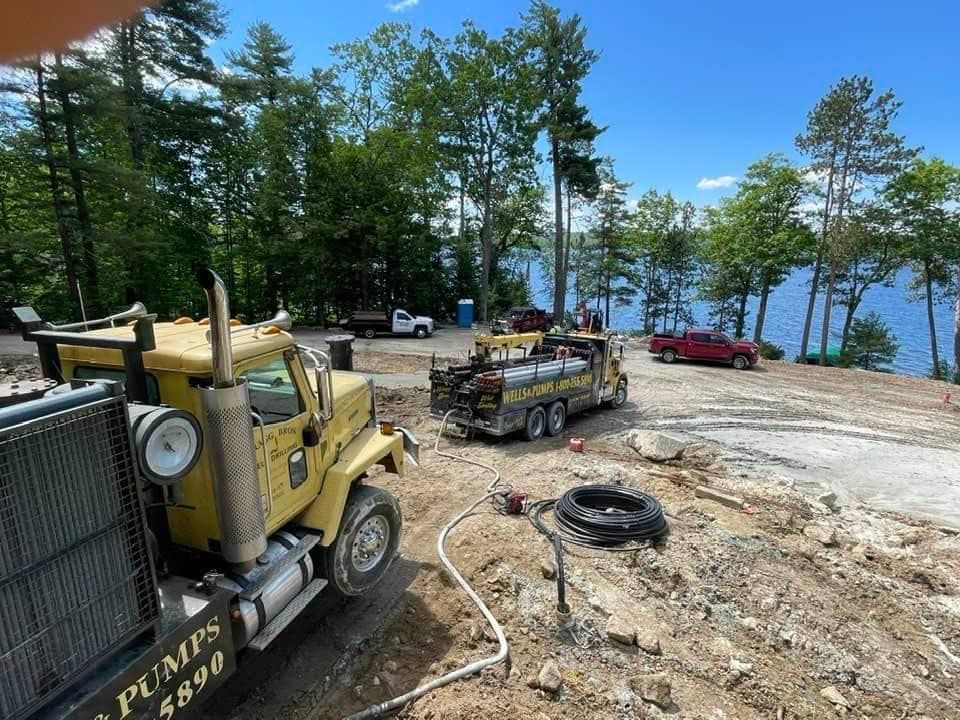
The standard industry solution for a low-yield bedrock well is a mechanical rehabilitation process. Because the existing well is already connected to a fracture network, the objective is simply to expand the reach of that network. This is achieved by injecting strictly potable, drinkable water into the existing borehole under extreme pressure—often exceeding 3,000 PSI.
This immense pressure forces the natural, microscopic cracks in the solid rock to open wider and propagate outward until they intersect larger, more productive water veins. The process flushes out decades of accumulated mineral sediment and permanently increases the flow rate of the well.
In Vermont and New Hampshire, this procedure is rigorously regulated to protect the aquifer's environmental integrity. Utilizing clean, potable water ensures that no harmful chemicals are introduced into the local groundwater supply. Property owners facing low yields can rely on professional hydrofracking services at hydrofracking to safely increase the production capacity of their existing borehole, securing the volume necessary for extensive landscaping.
Frequently Asked Questions
What is a well yield test for irrigation?
A well yield test is a specialized diagnostic procedure that measures the exact volume of water a private well can produce continuously. Technicians pump water from the well over a sustained period, measuring how far the water level drops and how quickly the underground rock fractures refill the borehole. The resulting calculation, measured in gallons per minute (GPM), determines if the well can safely support the high-volume demand of an irrigation system without running dry.
Can I use my existing well to fill a new swimming pool?
Filling a swimming pool requires thousands of gallons of water in a single event. If a well has a low yield or slow recharge rate, attempting to fill a pool using a standard garden hose can easily drain the well completely, causing the submersible pump to overheat and fail. Property owners should always have their yield verified first. If the yield is insufficient, the safest alternative is to hire a commercial water delivery truck to fill the pool, saving the well strictly for daily household use.
How many gallons per minute do I need for an irrigation system?
The required GPM depends entirely on the design of the irrigation system, including the number of sprinkler zones and the specific type of sprinkler heads utilized. A small, simple zone might require 5 GPM, while extensive systems can demand 15 GPM or more. An irrigation contractor must design the system so that its maximum demand never exceeds the verified, tested yield of the property's water well.
What happens if my well runs dry while watering the lawn?
If the well runs dry, the submersible pump will continue to run without water. Because the pump relies on cold groundwater for cooling, it will rapidly overheat. The internal components will melt or seize, resulting in a catastrophic motor failure. To prevent this, many modern pump control boxes can be fitted with specialized sensors that detect a drop in water pressure and automatically shut the pump off before heat damage occurs.
Will a new pressure tank solve my low well yield?
No. A pressure tank stores water inside the home to provide steady pressure to the plumbing fixtures, but it does not create water. If the underground aquifer is only capable of producing two gallons per minute, installing a larger tank in the basement will not increase the total volume of water available from the earth. Increasing the actual yield of the well requires mechanical intervention below ground, such as hydrofracturing to open new rock fractures.
Conclusion
Upgrading a property with extensive landscaping features requires balancing ambitious design with the physical limits of the natural environment. In the crystalline bedrock of New England, groundwater is a finite resource governed by narrow rock fractures. Assuming an existing well can support the continuous, heavy demand of irrigation or pool filling without verification invites severe infrastructural damage. By conducting a certified well yield test before construction begins, property owners eliminate the risk of motor burnout and secure the data necessary to engineer a safe, reliable, and sustainable water management plan for their entire property.
For property owners seeking additional information or professional support related to this topic, Wragg Brothers Well Drilling provides well drilling and water system services in New Hampshire. Learn more at https://www.wraggbrothers.com/.