Can You Retrofit an Older Home with Geothermal Heating? A Guide for New Englanders
New England is renowned for its historic housing stock. From 18th-century colonials in Massachusetts to mid-century farmhouses in Vermont and New Hampshire, these homes offer an architectural character that modern constructions often lack. However, they also rely heavily on outdated heating infrastructure. Heating an older home with delivered oil or propane is increasingly expensive and leaves property owners vulnerable to volatile energy markets.
Property owners frequently wonder if they can modernize these aging structures without destroying their charm. Specifically, they ask if it is possible to retrofit geothermal heating systems into existing, historic houses.
The short answer is yes. While retrofitting an older home requires careful engineering and a thorough understanding of the local geology, integrating modern geothermal technology into historic infrastructure is a highly practical way to stabilize heating costs and improve reliability. This guide explains how the process works, what property owners must consider regarding their existing ductwork or piping, and what to expect when a drilling rig arrives on an established property.
The Mechanics of a Retrofit Geothermal Heating System
Geothermal heating operates on a very simple physical principle: the earth beneath our feet maintains a constant temperature. In the New England region, the bedrock temperature stays at roughly 50 degrees Fahrenheit year-round, regardless of snow or ice on the surface. A geothermal system uses this stable thermal energy to heat your home in the winter and cool it in the summer.
The system relies on a vertical closed-loop well. A drilling rig bores a vertical hole deep into the granite or schist bedrock. Installers then insert continuous polyethylene pipes into the borehole and circulate a water-based fluid through them. As the fluid travels hundreds of feet underground, it absorbs the earth's natural heat. A heat pump located inside the basement extracts this thermal energy from the fluid, compresses it to a much higher temperature, and distributes it throughout the house.
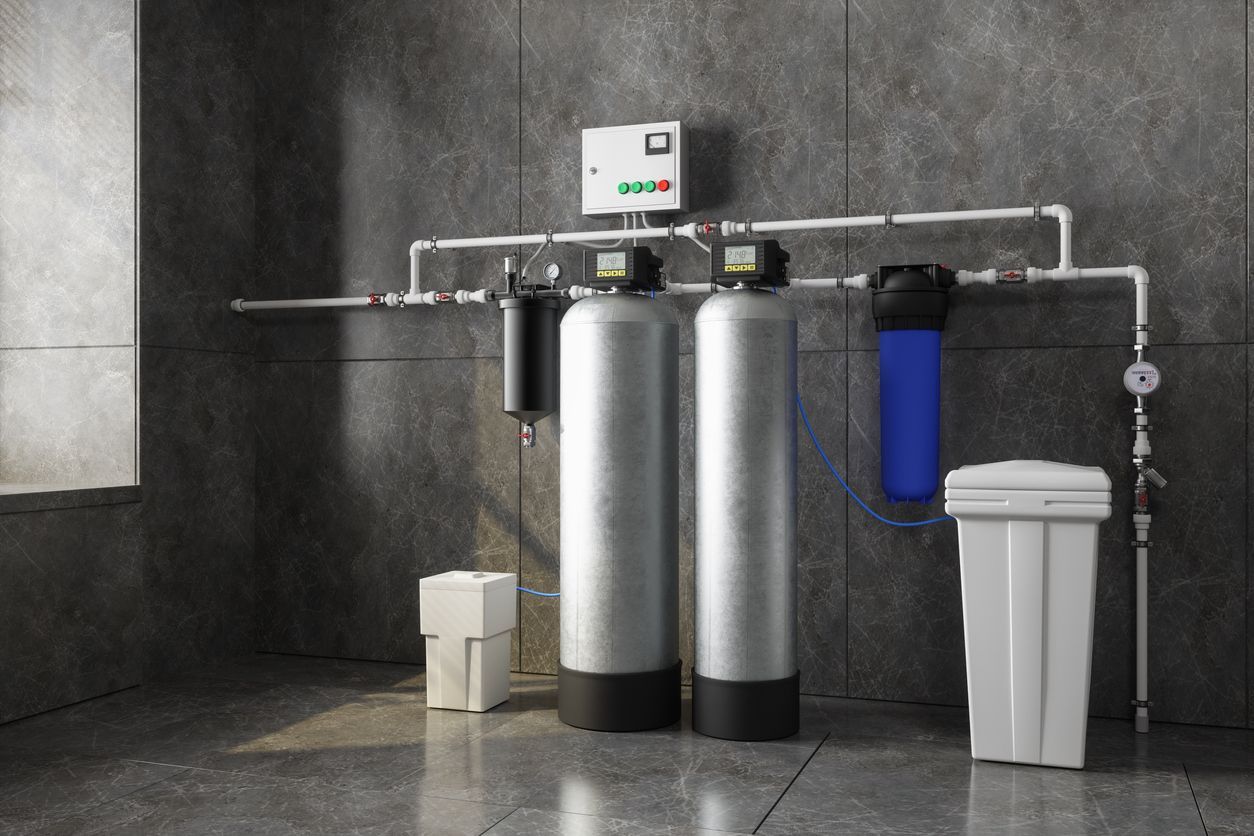
Choosing to retrofit geothermal heating means replacing the traditional oil or gas furnace with an earth-coupled heat pump. The process does not require demolishing the home or rebuilding it from scratch. The heat pump simply becomes the new engine driving the home's climate control. It connects to the existing electrical panel and integrates into the home's internal air or water distribution system.
Evaluating Your Home’s Existing Distribution Infrastructure
The primary challenge when outfitting a historic home with new heating technology is not the well itself; it is how the heat moves through the house. When property owners transition away from fossil fuels, they must evaluate their existing distribution methods to ensure compatibility.
If the home currently uses forced-air heating, the transition is usually straightforward. The new geothermal heat pump connects directly to the existing sheet metal ductwork. The internal fan blows the newly warmed air through the exact same vents that the old furnace used.
Homes that rely on hot water radiators, baseboard hydronics, or radiant floor heating require a different configuration. Traditional oil boilers heat water to very high temperatures, often exceeding 160 degrees. Geothermal heat pumps operate more efficiently at lower temperatures, producing a steady, continuous warmth. If the home has large cast-iron radiators or modern radiant flooring, a water-to-water geothermal heat pump can successfully heat the space because the high surface area of the radiators compensates for the lower water temperature.
However, if the home uses narrow copper fin-tube baseboards, the surface area may be too small to adequately heat rooms at the lower water temperatures provided by the geothermal unit. In these instances, installers may recommend upgrading sections of the baseboard or supplementing the system with localized ductless wall units. To understand more about the specifics of these mechanical configurations, property owners can research what is a closed loop geothermal system to see how the underground pipes and the above-ground heat pump interact.
The Drilling Process on Established Properties
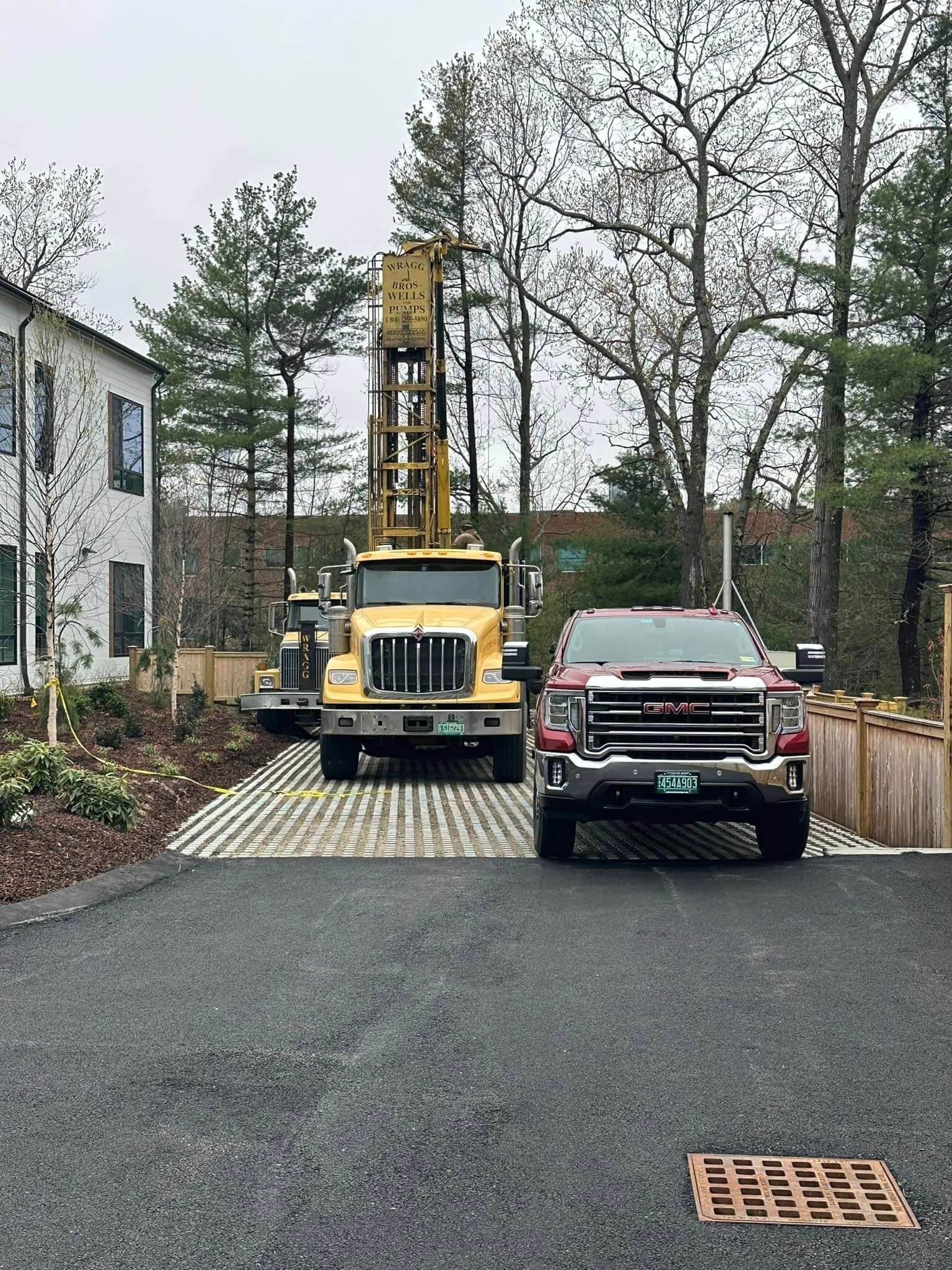
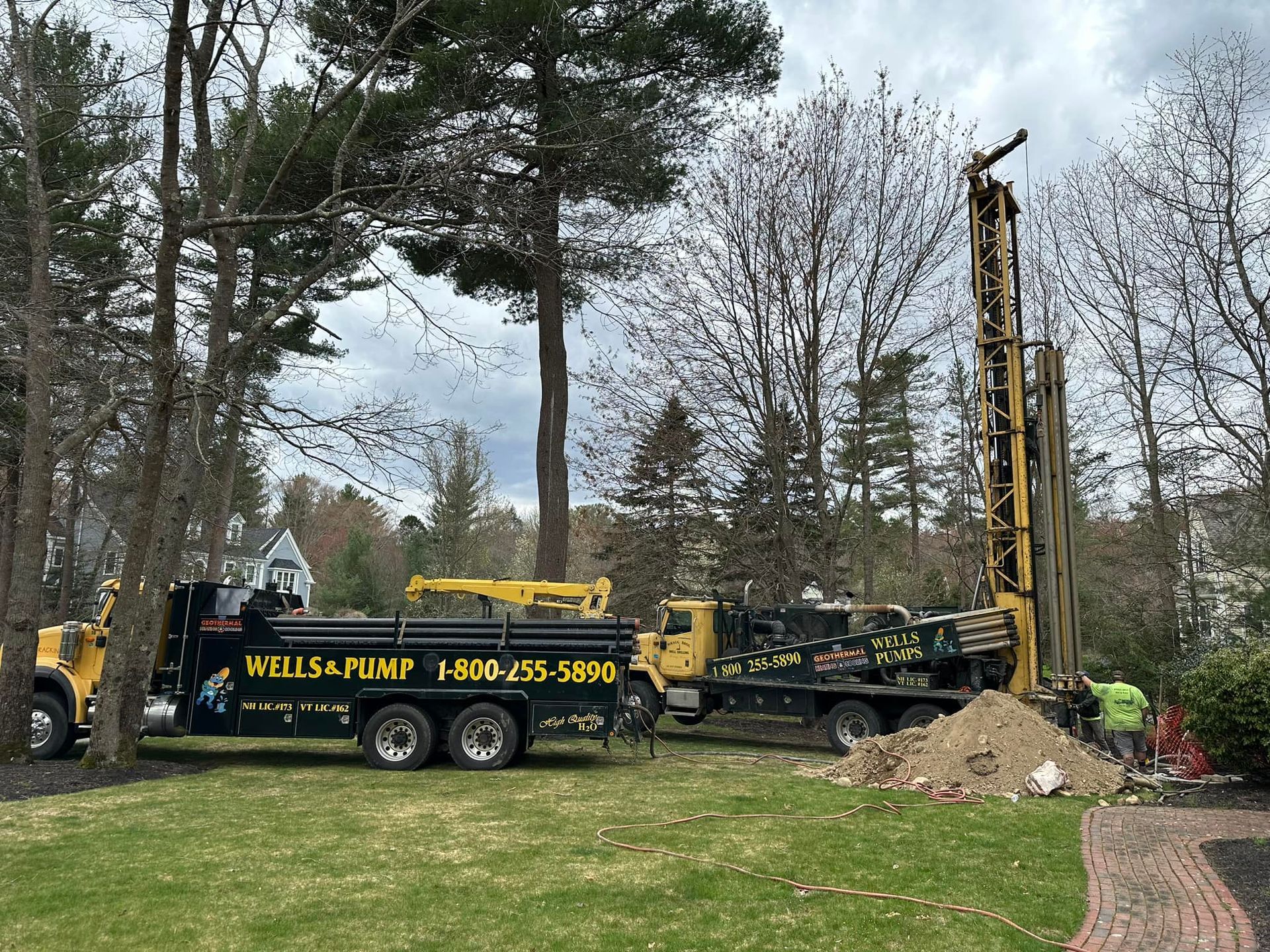
Installing the underground loop is the most intensive phase of the project. A water well drilling rig must access the property to drill the vertical borehole, which is typically 300 to 500 feet deep. The Wragg family has been navigating the tight lots and historic properties of Vermont, New Hampshire, and Massachusetts since 1956. Over three generations, we have learned that site preparation is critical to protecting an established landscape.
Property owners often worry that a drill rig will destroy decades of careful landscaping. While drilling involves heavy machinery, modern techniques minimize the footprint. Drillers use specialized matting to protect lawns and driveways from the weight of the trucks. The drilling process itself—whether using standard pneumatic air rotary hammers or emerging sonic technology—creates rock dust and water runoff. Professionals manage this waste strictly, containing the cuttings and routing the water away from sensitive areas, gardens, or septic systems.
Because New England geology features shallow, dense crystalline bedrock, drilling for geothermal loops is virtually identical to drilling a standard water well. The location of the borehole is determined by property lines, underground utilities, and the required legal setbacks from existing septic leach fields. Unlike horizontal loop systems, which require excavating vast trenches across an entire yard, a vertical loop requires a borehole only six inches in diameter. This vertical approach allows contractors to retrofit historic properties that have minimal acreage.
Navigating the Investment and Efficiency Upgrades
Upgrading to geothermal is a significant infrastructure investment. The upfront costs of drilling the boreholes through hard New England granodiorite and installing the heat pump exceed the cost of simply swapping out an old oil burner. However, the operational savings are substantial. Geothermal systems move heat rather than burning fuel to create it, making them highly efficient. Property owners eliminate their reliance on delivered oil and propane, securing long-term utility stability.
Before sizing a new system, it is absolutely necessary to assess the home's thermal envelope. Historic New England homes are famously drafty. An undersized heat pump will struggle to keep an uninsulated farmhouse warm in January, while an oversized pump will short-cycle and wear out prematurely. Before you retrofit geothermal heating, securing a comprehensive energy audit is a necessary step. Adding modern insulation to the attic and sealing drafty windows ensures that the new system operates at peak efficiency.
Federal incentives also help offset the initial installation burden. The current Federal Investment Tax Credit (ITC) allows homeowners to claim a significant percentage of the installation cost against their federal taxes. This makes the transition much more financially feasible for families looking to update their century-old homes. For a deeper look into regional advantages and considerations, property owners can read about exploring the potential of New Hampshire geothermal.
Frequently Asked Questions
Can I use my existing radiators with a geothermal heat pump?
Yes, in many cases, existing radiators can be used. Large, traditional cast-iron radiators are excellent for geothermal systems because they hold a high volume of water and radiate heat effectively even at lower water temperatures. A water-to-water heat pump connects directly to this existing plumbing.
Will the drilling rig destroy my landscaping?
Drilling requires heavy machinery, and some temporary landscape disturbance is unavoidable. However, experienced drillers use protective ground mats to shield the lawn and driveway from the tracks and tires of the rig. The debris from the borehole (rock cuttings and water) is managed and contained to prevent washout into gardens or walkways.
How much space do you need to drill a geothermal well?
Vertical closed-loop systems require surprisingly little surface area. The borehole itself is roughly six inches across. The primary spatial requirement is enough clearance to maneuver the drilling rig into place and ensuring the well is drilled at a safe, legally required distance from septic systems and property lines.
Does a retrofit geothermal heating system provide air conditioning?
Yes. One of the greatest benefits of geothermal technology is that it is fully reversible. In the winter, it extracts heat from the earth to warm the house. In the summer, the system reverses direction, extracting heat from the house and depositing it back into the cool bedrock, providing highly efficient central air conditioning without needing a separate outdoor compressor unit.
Will my older home need additional insulation before installing geothermal?
It is highly recommended. Many historic New England homes lack modern insulation. If the house loses heat quickly through the roof or walls, the geothermal system will have to work much harder to maintain a comfortable temperature. Sealing drafts and upgrading insulation allows you to install a smaller, more efficient heat pump, lowering the total cost of the project.
Conclusion: Ensuring Longevity in Historic Homes
New England’s historic housing stock requires specialized care. The decision to retrofit geothermal heating is not just an upgrade to the utility room; it is a commitment to the long-term preservation and modernization of the property. By transitioning away from combustion heating, property owners eliminate the risks of carbon monoxide, oil leaks, and chimney fires.
While the mechanical components of the heat pump will eventually need replacement after decades of use, the underground vertical loop is a permanent addition to the property. Polyethylene pipe buried in solid bedrock can last for generations, much like the stone foundation of the house itself. Upgrading an older home with this technology merges the architectural heritage of the past with the energy resilience required for the future.
For property owners seeking additional information or professional support related to this topic, Wragg Brothers Well Drilling provides well drilling, pump repair, and geothermal drilling services across Vermont, New Hampshire, and Massachusetts. Learn more at https://www.wraggbrothers.com/.