The Hidden Dangers of Manganese: More Than Just Stained Laundry
For property owners relying on private wells in New Hampshire and Vermont, managing water quality is an ongoing responsibility. While much attention is rightly given to high-profile contaminants like arsenic and uranium, another naturally occurring element often quietly compromises residential water systems. That element is manganese.
Historically, manganese in well water was treated primarily as a household nuisance—an irritating mineral that ruined white fabrics and fouled plumbing fixtures. Property owners often learned to live with the metallic taste and the dark, unsightly buildup in toilet tanks. However, understanding of this mineral has evolved. Recent scientific studies indicate that elevated levels of manganese pose genuine health risks, particularly concerning neurotoxicity in infants.
This article explains the geological origins of manganese in New England, details its physical and chemical impacts on your home, and outlines the necessary steps to ensure your family’s water remains clean, safe, and reliable.
The Geological Source of Manganese in New England Bedrock
To understand why manganese is present in your tap water, you must first look at the rock beneath your property. The geology of New England is defined by complex, dense metamorphic and igneous formations. Unlike regions where water filters through broad layers of soft sandstone, aquifers in Vermont and New Hampshire rely on "fracture flow." Groundwater moves exclusively through a network of narrow cracks, joints, and fissures in the solid rock.
As groundwater slowly navigates these fractures over decades or centuries, it acts as a universal solvent. It dissolves and absorbs the minerals present in the stone. Manganese is ubiquitous in the metamorphic schists and volcanic rocks of the region. For example, areas situated over the Ammonoosuc Volcanics, such as the regional hotspot of Springfield, Vermont, frequently exhibit elevated manganese concentrations in the groundwater.
Because water chemistry is dictated by the specific fracture a well intersects, manganese levels can vary drastically over short distances. One home may draw crystal-clear water, while a neighboring property, drilled to the exact same depth, may tap into a mineral-rich vein that produces highly concentrated manganese. This geological unpredictability means property owners cannot rely on regional averages to determine their own water quality.

The Aesthetic Frustrations: Stains and Clogged Plumbing
The most immediate and obvious sign of manganese in well water is aesthetic degradation. When water containing dissolved manganese is drawn from the deep, oxygen-depleted environment of a bedrock aquifer and introduced to the oxygen-rich environment of a home, a chemical reaction occurs. The dissolved manganese oxidizes, precipitating as solid, dark particles from the water.
This is why water may appear perfectly clear when first poured from the kitchen faucet, only to leave behind stubborn black or dark brown stains in sinks, bathtubs, and dishwashers after it sits. When this water is used for laundry, the oxidation process is often accelerated by the introduction of bleach or detergent, resulting in dark, permanent spots on light-colored fabrics.
Beyond staining, manganese imparts a distinct, bitter, or metallic taste to drinking water and beverages like coffee and tea. Over time, the precipitated manganese acts similarly to plaque in an artery. It accumulates inside household plumbing, narrowing the interior diameter of pipes and permanently fouling the mechanisms of water heaters and dishwashers.
Because manganese rarely occurs alone in New England geology, it is frequently found alongside high concentrations of iron. These two minerals compound the aesthetic damage, creating a mixture of rust-colored and black slimes that can overwhelm standard household plumbing. Addressing this dual threat often requires robust filtration. Property owners dealing with these overlapping issues frequently research the-best-iron-filter-for-well-water-solutions to understand the mechanical requirements for removing heavy mineral loads from their specific water supply.
The Emerging Health Risks: Manganese and Neurotoxicity
For decades, state health departments and water professionals treated manganese strictly as a secondary contaminant—meaning it was regulated based on aesthetics (taste, odor, color) rather than health and safety. Property owners were advised that while the water might look unpleasant, it was generally safe to consume.
That guidance has shifted significantly. Manganese is a trace element that human bodies require in small amounts, typically absorbed safely through a normal diet of leafy greens, nuts, and grains. However, the human digestive system processes manganese from food differently than it processes manganese dissolved in drinking water. Ingesting high concentrations of soluble manganese in water over a long period circumvents the body’s natural regulatory mechanisms.
The primary health concern regarding manganese exposure is neurotoxicity. Prolonged consumption of highly concentrated manganese can affect the central nervous system. In adults, extreme exposure has been linked to neurological symptoms resembling Parkinson's disease, including tremors and cognitive decline.
The risk is most acute for infants. Babies process and excrete minerals much less efficiently than adults. When infant formula is reconstituted using well water high in manganese, the child receives a concentrated dose that their developing nervous system cannot safely manage. Recent health studies strongly suggest that elevated manganese exposure in early childhood is associated with learning disabilities, behavioral issues, and lower cognitive performance. Because of this, resolving manganese issues is no longer just about protecting appliances; it is a critical step in protecting a family's health.

Establishing a Barrier: Testing and Treatment Solutions
The first rule of groundwater management is that you cannot treat what you have not accurately measured. Because manganese levels fluctuate based on seasonal groundwater changes and local bedrock composition, visual observation of stains is not enough to design a treatment system.
Property owners must initiate comprehensive laboratory analysis. This testing identifies not just the total concentration of manganese, but also the water's pH, hardness, and the presence of competing minerals like iron. Only with this specific chemical profile can a reliable filtration system be engineered. For guidance on how and when to analyze your water the blog on well-water-testing provides an overview of necessary testing protocols for private wells.
Once the exact concentration is known, mitigation can begin. A common misconception among property owners is that a standard water softener will solve a manganese problem. While a cation-exchange water softener can remove very small amounts of dissolved manganese, exposing a softener to high levels of the mineral will quickly foul the resin bed, destroying the equipment.
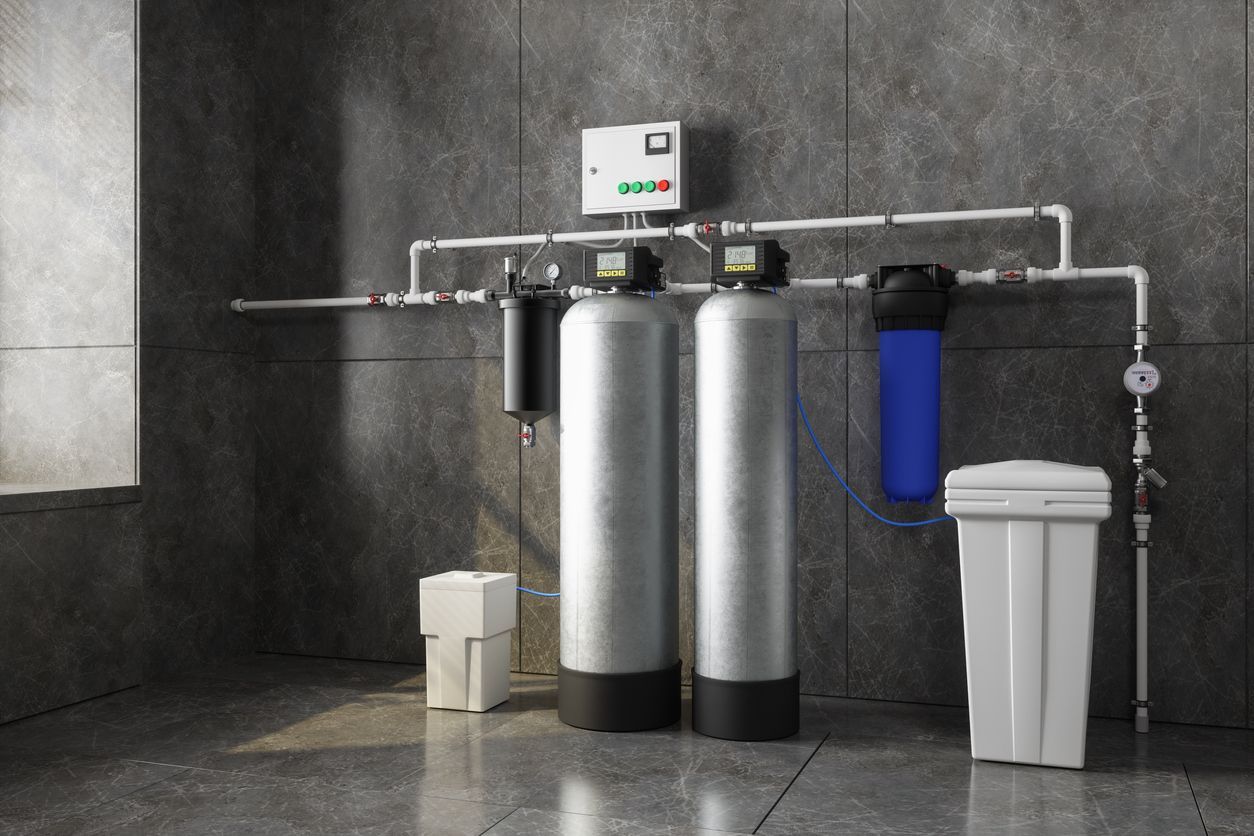
Effective removal typically requires a dedicated oxidation and filtration system. These systems work by injecting an oxidant—such as air, chlorine, or ozone—into the water line before it reaches the home. This forces the dissolved manganese to solidify into particles. The water is then pushed through a specialized media tank (often containing greensand or a similar catalytic media) that physically traps the solid manganese particles, allowing only clean, clear water to flow into the household plumbing.
Designing and installing these systems requires an understanding of fluid dynamics and water chemistry. The Wragg family has been operating in New England since 1956, building a 70-year history across three generations. That legacy of experience has demonstrated that off-the-shelf filters rarely succeed against the dense mineral loads of Vermont and New Hampshire bedrock. A custom-calibrated approach to water-conditioning is the only way to ensure the equipment functions reliably over the long term, protecting both the physical plumbing and occupant's health.
Frequently Asked Questions
How do I know if my well water contains manganese?
The physical indicators of manganese include dark brown or black stains in sinks, toilets, and dishwashers, as well as dark spots on laundry. The water may also have a bitter or metallic taste. However, to know the exact concentration and whether it poses a health risk, you must have a water sample analyzed by a state-certified laboratory.
Can a standard pitcher filter remove manganese?
No. Standard over-the-counter pitcher filters and refrigerator filters are typically equipped with activated carbon. These are designed to improve taste and remove simple odors like chlorine. They are not engineered to capture heavy mineral loads or heavy metals. Removing manganese requires dedicated, whole-house oxidation and filtration equipment.
Is it safe to bathe in water with high manganese levels?
Yes. Manganese does not easily absorb through the skin, nor does it vaporize into the air like radon. Bathing and showering in water with elevated manganese is safe and does not contribute to the neurotoxic health risks associated with ingestion. The primary risk occurs when the water is used for drinking or preparing food, particularly infant formula
Why do my neighbors have clean water while mine has manganese?
New England bedrock relies on fracture-flow aquifers. Water travels through isolated, specific cracks in the solid rock. Your well may intersect a fracture that runs through a vein of manganese-rich volcanic rock, while a well just fifty feet away may intersect a completely different fracture network with entirely different mineralogy. Water chemistry is unique to every individual borehole.
Does bleach or chlorine fix manganese staining?
No. In fact, adding household bleach or chlorine to water containing manganese will immediately make the problem worse. Bleach is a strong oxidizer. When it interacts with dissolved, invisible manganese in your laundry water, it forces the mineral to rapidly precipitate into a solid, black particulate. This reaction is what causes the permanent black stains on clothing.
Conclusion
A private well provides the benefit of independent water access, but it also places the burden of quality control entirely on the property owner. Understanding the presence of manganese in well water is vital for maintaining the longevity of a home’s plumbing infrastructure and ensuring the long-term health of the family residing there. By moving past the assumption that mineral-heavy water is merely a nuisance, and utilizing precise testing alongside engineered filtration, homeowners can establish a permanent barrier against this hidden geological threat.
For property owners seeking additional information or professional support related to this topic, Wragg Brothers Well Drilling provides well drilling, pump repair, and water conditioning services across Vermont, New Hampshire, and Massachusetts. Learn more at https://www.wraggbrothers.com/.