No Water in the House? A 5-Minute Emergency Checklist for Homeowners
Turning on a faucet and hearing nothing but a hollow hiss of air is a homeowner’s distinct nightmare. It instantly disrupts daily life—no showers, no flushing toilets, no cooking. For families relying on private wells in New Hampshire and Vermont, the immediate assumption is often the worst-case scenario: the well has gone dry, or the pump has failed catastrophically.
While those are possibilities, they are not the only reasons water stops flowing. In our family’s seven decades of experience servicing wells across New England, we have found that a significant percentage of "no water" calls are caused by minor electrical trips, bumped switches, or clogged filters—issues that can sometimes be resolved without a service truck.
Before you panic or assume you need to drill a new well, take five minutes to walk through this emergency triage checklist. It covers the mechanical and electrical basics of your water system. Even if these steps do not restore your water, performing them will provide your well technician with critical information, potentially speeding up the repair process when they arrive.
Step 1: Check the "Stupid" Simple Stuff (Power & Switches)
It sounds obvious, but the most common cause of sudden water loss is simply a lack of power to the submersible pump. Your well pump is an electrical appliance, usually buried hundreds of feet underground, and it relies on a steady current to push water up the borehole.
Inspect the Circuit Breaker Go to your main electrical panel. Look for the breaker labeled "Well," "Pump," or "Water." Well pumps typically run on 220-volt circuits, meaning they will be a "double pole" breaker (taking up two slots).
• If it is tripped: The handle will be in the middle position (neither fully ON nor fully OFF) or showing a red indicator. Flip it firmly to OFF, then back to ON.
• If it trips again immediately: Stop. Do not try to force it. This indicates a hard short in the wiring or a seized pump motor. Resetting it repeatedly can damage the wiring or cause a fire hazard. Call a professional immediately.
Check the Emergency Service Switch Most building codes in New Hampshire and Vermont require a dedicated shut-off switch near the pressure tank. This often looks like a standard light switch, usually in a red switch plate cover. Because these are often located in basements, garages, or utility closets, they are easily bumped by someone carrying laundry, holiday decorations, or sports equipment. Ensure this switch is in the "ON" position.
Step 2: Read the Pressure Gauge
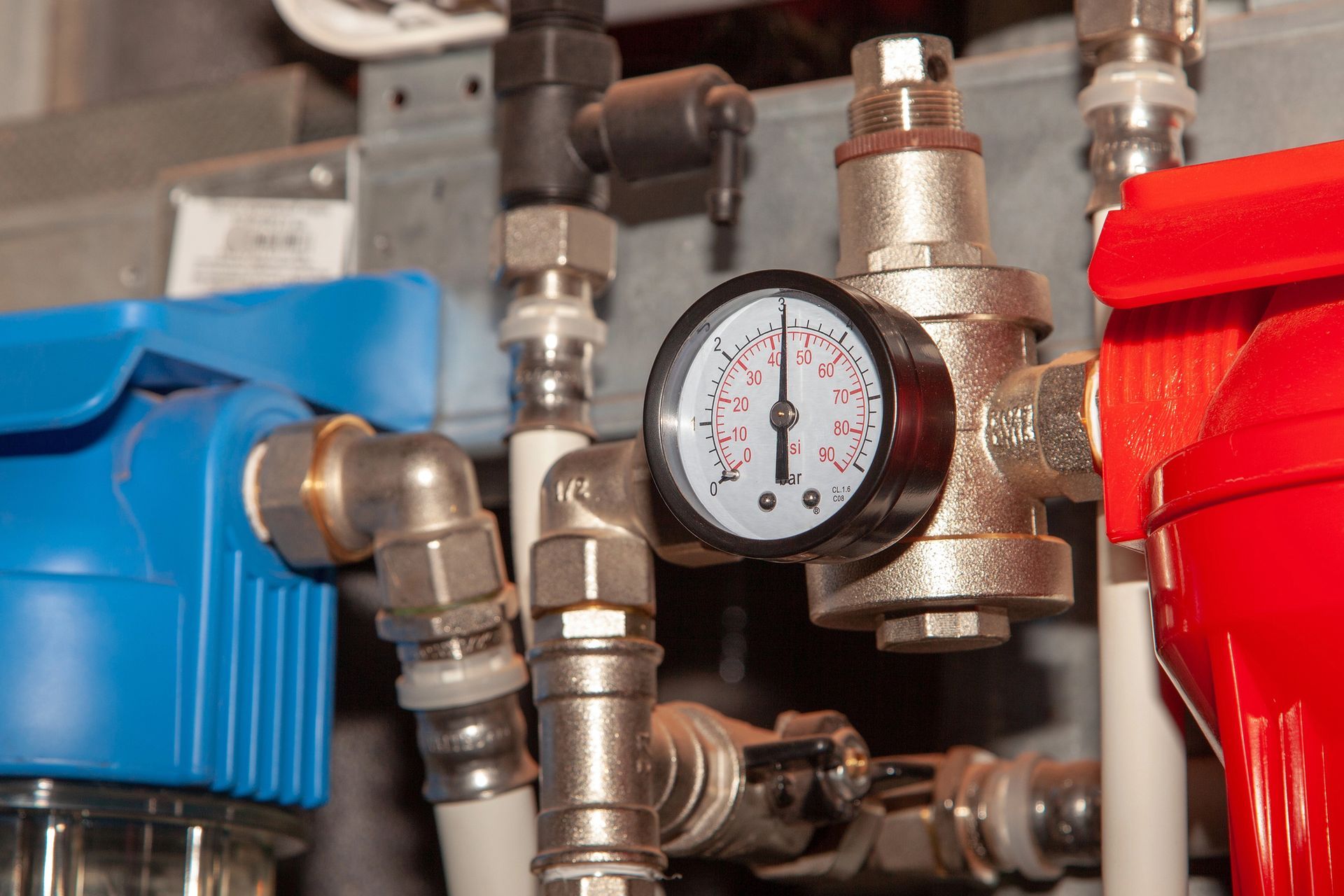
If the power is on, your next step is to go to the pressure tank. This is the large blue or gray metal cylinder usually located in your basement. Near the bottom of the tank, you will see a small circular dial—the pressure gauge.
This tiny dial tells the story of what is happening underground.
Scenario A: The Gauge Reads 0 PSI If the needle is resting on zero, there is no water pressure in the system. This confirms that the pump is not sending water to the house. If you have confirmed the power is on (Step 1), the issue is likely down the well (a broken wire, a failed pump, or a dry well) or with the pressure switch itself.
Scenario B: The Gauge Reads Normal Pressure (40–60 PSI) If the gauge reads 40 PSI or higher, but no water is coming out of your kitchen tap, the problem is likely inside the house, not down the well. The pump has successfully filled the tank, but something is blocking the water from leaving the tank and entering your home’s plumbing. This is rarely a pump failure; it is usually a filtration blockage.
Step 3: Inspect Your Whole-House Water Filter
This is the most overlooked culprit in "no water" situations. In our region, where groundwater can be rich in iron and sediment, many homes are equipped with whole-house cartridge filters. These look like clear or blue plastic cylinders housing a white filter cartridge.
If this filter becomes completely clogged with sediment—perhaps stirred up by a recent storm or heavy usage—it acts like a cork, stopping water flow entirely.
The Bypass Test Most installations include a "bypass" valve system around the filter.
1. Locate the valves leading into and out of the filter housing.
2. Turn the handle to "Bypass" (bypassing the filter unit).
3. Check a faucet.
If water flow is restored immediately, you simply need to change the filter cartridge. This saves you the cost of an emergency service call. Once the cartridge is replaced, remember to take the system out of bypass to ensure your family continues to receive treated water.
Step 4: Listen to the Pressure Switch
The pressure switch is a small, component (usually gray or black) roughly the size of a deck of cards, located near the pressure gauge. It acts as the brain of the system, sensing when pressure drops and telling the pump to turn on.
Have someone stand near the tank while another person turns on a faucet to drain any remaining water.
• Listen for a "Click": When the pressure drops, you should hear a distinct mechanical click. This is the contacts closing to send electricity to the pump.
• If it clicks but nothing happens: The switch is doing its job, but the pump isn't responding. This points to the control box or the pump itself.
• If it doesn't click: The nipple connecting the switch to the pipe might be clogged with sediment, preventing the switch from sensing the pressure drop.
Step 5: Check for Recovery (The "Running Dry" Symptom)
Sometimes, "no water" is actually "low water." If you used a significant amount of water (filling a pool, watering a lawn, or doing several loads of laundry) and the water stopped, you may have temporarily pumped the water level down below the pump intake.
Turn off all faucets and the pump breaker. Wait 30 to 60 minutes. Turn the breaker back on and try a faucet.
• If water returns: Your well is producing water, but your usage exceeded the well’s recharge rate. This is common in the bedrock aquifers of Vermont and New Hampshire, which rely on fracture flow rather than vast underground lakes.
• If this happens frequently: You do not necessarily need a new well. Technologies like hydrofracking can often open up new water veins in existing wells, restoring the flow needed for modern household demand.

When to Call for Service
If you have checked the breaker, confirmed the switch is on, bypassed the filter, and still have zero pressure, it is time to call a professional.
When you call, relay the information you gathered:
• "The breaker is not tripped."
• "The pressure gauge reads zero."
• "I heard the switch click, but the pump didn't start."
This specific information helps the technician determine if they need to bring a crane truck to pull the pump or just electrical components to fix a control box.
Common Causes of Water Loss in New England
Understanding the root causes of water failure can help you make better decisions about your system's long-term health.
1. The Well Pump Has Failed Submersible pumps are durable workhorses, but they do not last forever. The average lifespan of a well pump is typically 12 to 15 years, though this varies based on water quality and usage intensity. If your system is approaching this age, a sudden failure is not uncommon. For more on this, you can read about well water pump systems and their lifecycles.
2. Component Corrosion Our local geology, particularly the granite and schist common in New Hampshire and Vermont, can produce water with varying pH levels and mineral content. Over time, the small nipple connecting the pressure switch to the pipe can corrode and clog with iron or manganese. This blinds the switch to the system's actual pressure, causing it to shut off the pump even when water is needed.
3. Drought and Low Water Table In recent years, New England has experienced shifting weather patterns, including periods of significant drought. Shallow wells or wells drilled into low-yield bedrock fractures are most susceptible. If your well is struggling to keep up with demand, it may not be "broken," but rather insufficient for your current needs. Regular maintenance and inspection can help identify yield trends before you are left completely dry.
4. The Control Box Capacitor For systems with a control box mounted on the wall (standard for many submersible pumps), the starting capacitor is a common failure point. If the pump tries to start but hums and shuts off, or if the capacitor looks swollen or leaks oil, this inexpensive part is likely the culprit.
Restoring Your Water Security
Losing water access is a stark reminder of how vital this utility is to your home. While the checklist above can solve simple issues, the complexity of groundwater systems means that some problems require heavy equipment and licensed expertise.
If your water returns after a waiting period, treat it as a warning sign rather than a permanent fix. A well that runs dry once is likely to do so again. Whether the solution involves lowering the pump, hydrofracking to increase yield, or installing a larger storage system to buffer peak demand, addressing the root cause is the only way to ensure your family isn't left checking the breaker box again next month.
Frequently Asked Questions
If my water comes back on after an outage, is it safe to drink?
If the outage was caused by the well running dry or the water level dropping significantly, the returning water may be turbid (cloudy) or brown due to stirred-up sediment. While sediment itself isn't always toxic, it can interfere with disinfection systems like UV lights. It is generally best to run an outside faucet until the water clears. If the water remains discolored or if you have concerns about bacteria entering the system during the outage, you should have the water tested.
Can I burn out my pump if I keep resetting the breaker?
Yes. If the breaker trips, it is protecting the wiring from overheating. If the pump is jammed with sand or the motor has shorted out, forcing the breaker back on sends a massive surge of electricity into a compromised unit. This can melt the wires down the well, turning a standard pump replacement into a much more expensive repair job that involves replacing hundreds of feet of wire.
How do I know if my well is actually dry or if the pump just broke?
A broken pump usually results in sudden, total silence—no water, no pressure build-up. A well running dry typically gives warning signs first: sputtering faucets, water that looks milky (air bubbles) or dirty, and the pump running for long periods without satisfying the pressure switch. If you hear the pump running but no water builds up in the tank, the water level may have dropped below the pump intake.
Does a "no water" call mean I definitely need to drill a new well?
Rarely. The vast majority of "no water" calls are equipment failures—pumps, switches, wires, or tanks—not a failure of the hole in the ground itself. Even if the well yield is low, methods like hydrofracking or deepening the existing well are often preferred and more cost-effective than drilling a brand-new well from scratch.
Why does my pressure gauge read zero?
The gauge measures the water pressure stored in your tank. If it reads zero, it means the tank is empty. This happens because water was used in the house, but the pump did not kick on to replenish it. This confirms the break in the chain is between the aquifer and the tank, rather than between the tank and your faucet.
Conclusion: Restoring Your Water Security
Losing water access is a stark reminder of how vital this utility is to your home. While the checklist above can solve simple issues, the complexity of groundwater systems means that some problems require heavy equipment and licensed expertise.
If your water returns after a waiting period, treat it as a warning sign rather than a permanent fix. A well that runs dry once is likely to do so again. Whether the solution involves lowering the pump, hydrofracking to increase yield, or installing a larger storage system to buffer peak demand, addressing the root cause is the only way to ensure your family isn't left checking the breaker box again next month.
Resource: For property owners seeking additional information or professional support related to well troubleshooting and repairs, Wragg Brothers Well Drilling provides well drilling, pump repair, and water system services in Vermont and New Hampshire. Learn more at https://www.wraggbrothers.com/